

theatlanticcities.com
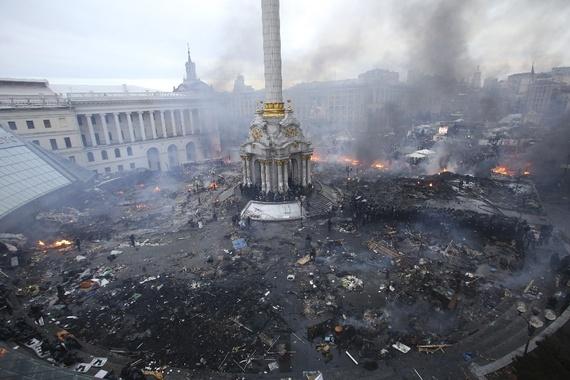 Ukraine is the size of Texas, but for the last three months its burgeoning protest movement has largely crowded into the space of 10 city blocks. The name for the movement itself, Euromaidan, is a neologism fusing the prefix euro, a nod to the opposition's desire to move closer to the EU and away from Russia, with the Ukrainian (and originally Persian and Arabic) word maidan, or public square
 Caught in an emerging market storm, some resource-rich states may keep more windfall income in liquid assets, ready to aid their economies, rather than locked up in strategic investment for future generations.
 The Soviet Union collapsed more than 20 years ago, yet genuine democracy is still a stranger in most of the 15 former republics. Ukraine, where at least 25 people were killed on Tuesday, is just the latest bloody example. From President Vladimir Putin's hard-line rule in Russia to the 20-year reign of Alexander Lukashenko in Belarus to the assorted strongmen of Central Asia, many post-Soviet rulers consistently display a fondness for the old days, when opposition was something to be squashed, not tolerated.
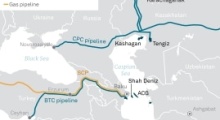
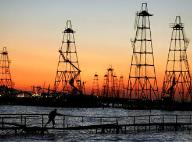 Unplanned interruptions in the global oil supply chain last year were about 30 percent higher than in 2013, the U.S. Energy Department said. Much of the problem was blamed on Libya, though sputtering from Kazakhstan's giant Kashagan field played a factor as well. This year could be North America's to lead in terms of secure production, but the story for 2014 is as certain as market predictions themselves.
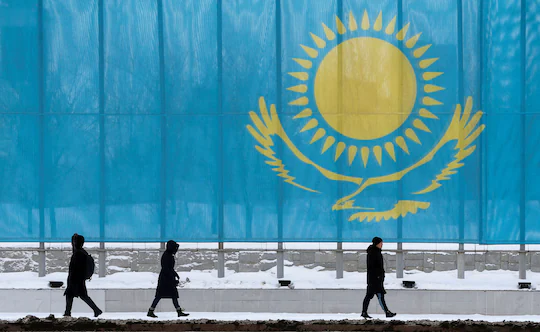
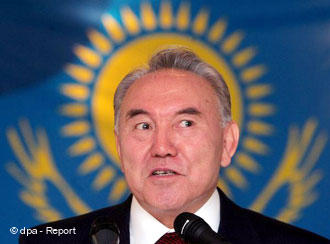
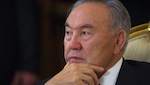 Kazakhstan's President Nursultan Nazarbayev ordered officials on Friday to raid the country's strategic oil reserve and slash banks' bad loans, stamping his authority on the economy in an effort to prevent growth rates from slipping. Nazarbayev, who has ruled the oil-rich nation for more than two decades, said the government should use 1 trillion tenge ($5.4 billion) from the rainy-day fund to boost the economy during 2014 and 2015.
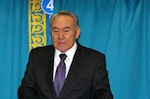 Kazakh President Nursultan Nazarbayev urged metals and oil producers such as Kazakhmys Plc (KAZ) and Glencore Xtrata Plc's Kazzinc to increase salaries by 10 percent after the tenge was devalued this week. ArcelorMittal, Eurasian Natural Resources Corp., and "large oil and gas companies and companies in other sectors" should consider increases, Nazarbayev said, according to a statement posted on his website today.
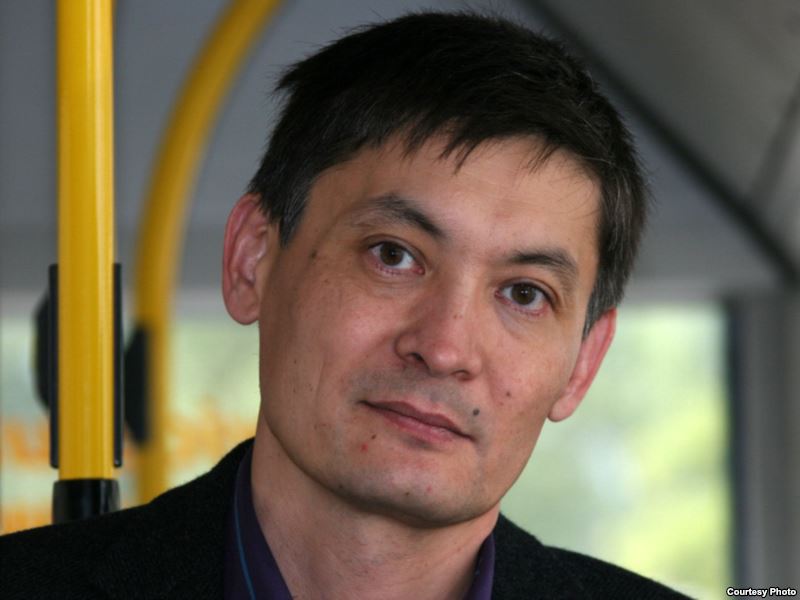 Wien. Knapp drei Stunden vor einer Pressekonferenz zur Causa des früheren Botschafters Kasachstans in Wien, Rakhat Aliyev, wurde diese abgesagt. Nicht vom Veranstalter der Pressekonferenz, dem "Auslandsbüro der Opposition Kasachstan - Koordinierungsstelle für demokratische Bewegung und Menschenrechte in der Republik Kasachstan. Sondern vom Betreiber der Marx Media Vienna, Christian Bodizs, in dessen Räumlichkeiten die Pressekonferenz stattfinden sollte.